The Book
The River Does Not Ask
A memoir of a life changed by serious illness — and by the people who entered the water along the way. The river is the organizing metaphor: life keeps moving whether a person is prepared or not.
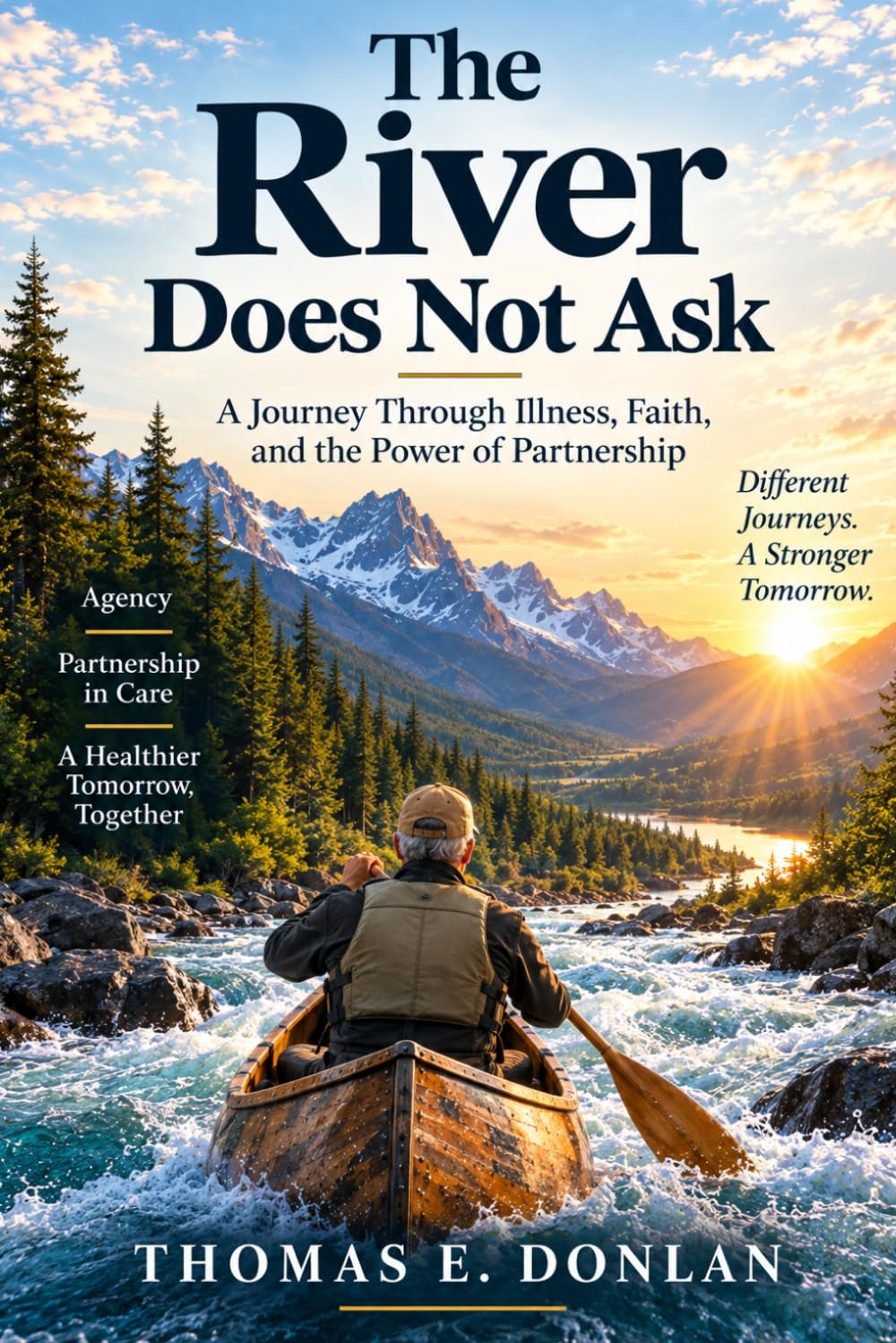
The book follows a life changed by serious illness and by the people who entered the water along the way. It begins before the medical crisis, moves through a major heart attack, bypass surgery, stroke, dangerous rhythms, implanted devices, repeated shocks, heart failure, transplantation, cancer, and the years after transplant — then turns toward what those experiences taught about agency, faith, fear, partnership, responsibility, and the humanity of the people providing care.
The book is not simply a sales page here. Its stories, questions, medical experiences, relationships, lessons, research, faith, humor, loss, and partnership themes become source material for articles, videos, educational pages, social media, newsletters, medical definitions, and future Spanish content.
The river continues to move whether a person is prepared or not. Illness changes the current without asking permission.
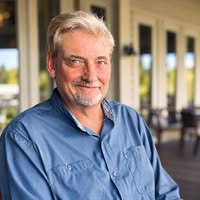
Thomas E. Donlan
Thomas is a survivor of a major heart attack, quadruple bypass surgery, stroke, repeated ICD shocks, heart failure, heart transplantation, and cancer. The River Does Not Ask is his account of what illness taught him about agency, partnership, and the humanity that exists on both sides of the exam table.
Chapter themes
Sixteen chapters, plus a coda. Each can become a story page, an article, a video discussion, a lesson, a caregiver resource, a medical definition, or a social series.
Before the Water Turned
Faith, failure, and the belief that strength means handling everything alone — before the heart disease becomes the current.
The Morning I Finally Looked Down
Warning signs, denial, a heart attack, four bypasses — and the first desire to understand what clinicians were seeing.
Tricky
A long relationship with cardiology, and the work a patient can do between appointments.
The Hallway in Las Vegas
A stroke, and the terror of knowing something is wrong while unable to make yourself understood.
Zip, Zip, Zip
Implanted cardiac technology as both protection and fear.
Softer Water Than He Looked
Advanced heart failure, and the danger of normalizing deterioration.
The One Who Waded In: The Healer
The physician who taught rather than merely directed — the central partnership.
IKEA, on the Far Bank of the Huangpu
Serious cardiac risk inside international work and travel.
The Storage Room Floor
Dangerous rhythm arriving in ordinary life, far from a hospital.
The Locked Door
Repeated shocks, fear, and the limits of what a record can communicate.
What Fear Left Behind
Suffering that remains long after the event — the bridge from physical to lasting.
Three Angels, Plus One
The practical love of caregivers and friends that never makes the chart.
Waiting for the Call
The uncertainty of waiting for transplant — one person's hope tied to another family's loss.
Boom. Boom. Boom.
The call, the crossing, trust, surrender, and gratitude.
The River Continued
Transplant does not end illness. Cancer enters — and research is brought as a question, not a verdict.
What the River Taught Me
Reflection that moves from me to we — humanity on both sides of the exam table.
Additional assets
Beyond the sixteen chapters
Music for the Journey
A curated companion of song titles and artists — never copyrighted lyrics. How music accompanied the journey.
Some Side Studies
How Thomas approached learning — reading to ask better questions. Learning is never mistaken for endorsement.
Medical Definitions
Plain-language terminology, grouped and sourced, linked from articles and chapters.
Where to Find Help
A maintained directory pointing to credible organizations, not diagnosis or treatment.